
Report of Correspondent of Mazdoor Ekta Committee
Both India and foreign corporates are employing more and more people who are not even considered workers. Their number has already risen to around 1.5 crore and rising month after month.Gig workers are one of the most exploited categories of workers in the country. Their demands of recognition as ‘worker’, extension of all workers’ rights to them, minimum monthly income, safety on job, security of employment, etc need support of the entire working class.
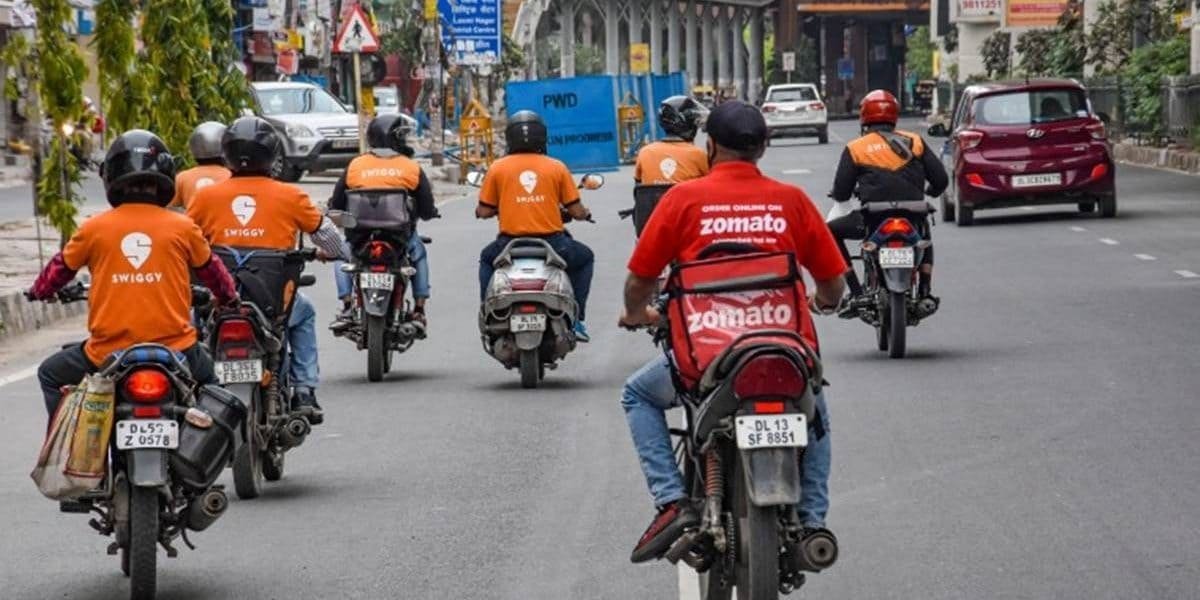
Gig workers all over the country went on strike on 25 December and on New Year eve, 31 December, 2025. Through the strike, they highlighted their terrible working conditions and placed their demands before the government. The strike actions were led by the Indian Federation of App-Based Transport Workers (IFAT), the Telangana Gig and Platform Workers Union (TGPWU), and other gig workers’ organisations.
The striking workers demanded, first and foremost, removal of the “10-minute delivery” model. They have been protesting for the past several months, against the “10 minute delivery” promise on the apps and advertisements of quick-commerce companies such as Blinkit, Zepto and Swiggy Instamart. The workers stated that the intense pressure to meet such tight deadlines imposed by the company often forces them to drive dangerously, in heavy traffic and bad weather conditions, leading to severe stress and accidents.
The gig workers demanded better wages. They demanded a minimum fixed per-kilometer rate and guaranteed minimum monthly income. Their current earnings are extremely low. They often earn less than Rs 500 in a day, after working for 12 to 15 hours. It must be kept in mind that they have to bear the expenses for fuel and maintenance of their vehicles themselves.
Gig workers are demanding social security. Gig workers are not recognised as “workers” but are classified as “independent contractors”. They are denied any kind of social security. Their demands included health and accident insurance, pensions, and maternity benefits.
The gig workers demanded government protection from arbitrary actions by the aggregator and platform companies. Gig workers can lose their jobs at a moment’s notice, and are always at the mercy of the company. The company blocks their accounts without any warning. Workers are thrown out of their jobs on the basis of unfair ratings. Through the strike, gig workers demanded an end to the punitive rating systems and deactivation of their accounts by the company at the slightest pretext, without due process or explanation.
The protesting workers demanded that gig and platform workers be legally recognized as “workers”, and guaranteed all rights that are legally due to workers.
Gig workers successfully organised the strike actions in the face of massive efforts of the companies they work for, to break the strikes. The strikes had a major impact in drawing people’s attention to the terrible working conditions into which they have been forced, in order to earn a livelihood with which they barely manage to survive.
One of the major achievements of the strike was the fact that the workers forced the Union Labour Ministry to address their safety concerns with the main platform companies – Blinkit, Zepto, Zomato, Swiggy, and others. Following the meetings with the Labour Minister, these companies have been asked by the government to remove the explicit “10-minute delivery” promise from their advertising and branding.
The demands of higher wages, legal protection from arbitrary harassment and dismissal, social security and legal recognition as “workers” have not yet been addressed by the government. The gig workers’ unions have expressed their determination to continue their struggle until these are granted.
Mazdoor Ekta Committee extends its full support to the struggle of gig workers for their rights.