
Report of meeting of Mazdoor Ekta Committee
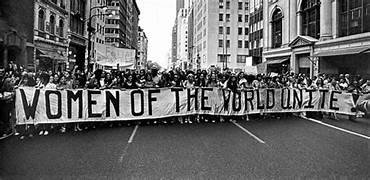
To mark International Women’s Day 2026, Mazdoor Ekta Committee (MEC) organised a meeting on 1 March, on the theme: Women demand freedom from all forms of exploitation and oppression!
Working women from different sectors and professions, school and college students, activists of various political parties, workers’ and women’s organisations participated in the meeting and in the animated discussions that followed.
On behalf of MEC, Shri Birju Nayak welcomed the participants. Women of all countries, including India, are boldly raising their voice in defence of their rights as women, as workers and as human beings, he pointed out. He drew attention to the real character and history of International Women’s Day – as a day which has its origin in the militant struggle of working women against capitalist exploitation, which is integrally linked with the movement for ending capitalist exploitation and building socialism.
Ms Sucharita of MEC hailed the struggles of teachers, nurses, health and sanitation workers, gig and platform workers, of women working in the garments, electronics, IT and other export-oriented industries, of scheme workers such as ASHA and Anganwadi workers, and many others — for security of livelihood, a dignified living wage, security at the workplace, social security and an end to gender discrimination and sexual violence. The institutions of the state, including the bureaucracy, the police and the judiciary, openly discriminate against women, she pointed out. Women are demanding that the state authorities be held accountable for their failure to ensure the safety and dignity of women. They are seeking punishment for all those who are guilty of violating the rights and dignity of women.
The four Labour Codes, she clarified, are an outright attack on working women. They give capitalists the freedom to openly flout all safety measures at the workplace, to increase the length of the working day to 12 hours and to deny the vast majority of working women and men a dignified living wage. They deprive most workers of any form of social security, of the right to form unions and to go on strike. Women workers can be forced to work in night shifts, without any provisions for their safety.
Sucharita explained that the root cause of the continuing discrimination and oppression of women lies in the nature of the state and the social system it maintains. The prevalent system of capitalist exploitation preserves the remnants of feudalism, the caste system and all the backward ideas and customs that justify the inferior and subordinate position of women. The subordinate position of women in society helps in maximising capitalist profits through their super-exploitation. The super-exploitation of women workers serves to intensify the exploitation of the entire working class.
Exposing the harsh reality of the existing system pf parliamentary democracy, she pointed out that the outcome of elections is determined by the biggest monopoly capitalists, through their money power, their control over the media and the Election Commission, as well as through manipulation of voter lists and EVMs. Even the right to vote is not guaranteed to all adult citizens, as the ongoing SIR exercise in many parts of the country clearly shows.
The masses of women and men are excluded from decision-making power. There are no mechanisms for people to make laws or amend them. There are no mechanisms for people to select their candidates for election, to hold them accountable or to recall them. Elected representatives are accountable only to the high command of their political party and not to the electorate.
Our experience shows that the institutions of the state cannot be relied upon, to defend the rights of women. The only way forward is for women to build and strengthen their fighting organisations, and to strengthen their unity with the entire working class and all the exploited and oppressed people.
Sucharita recalled that in the history of the past 100 years and more, the greatest advances in the emancipation of women took place in precisely those countries where the working class in alliance with all the exploited and oppressed overthrew the capitalist system and began building the new socialist society, free from all forms of exploitation and oppression. This bears testimony to the truth that ending the rule of the capitalist class is the first and essential step to open the path for the profound revolutionary transformations that will lead to the emancipation of women.
Sucharita concluded by calling on all women and men to unite and step up the struggle for an end to all forms of exploitation, oppression and discrimination against women.
Activists working among women in different sectors passionately described the problems that women and girls in our country face.
Ms Kavita Rajan of AITUC discussed the factors behind the low participation of women in the workforce. Women are paid lower than men for the same work and are the first to be thrown out of their jobs.
Ms Veena, an Anganwadi worker, spoke of the severe exploitation of scheme workers. They are not even recognised as workers. They are made to work for long hours but are paid only a meagre amount as “honorarium”, far less than the legal minimum wage for unskilled workers. Scheme workers are even being forced to work for the ongoing SIR process. They have to give reports online, in addition to going among the people, leading to a huge increase in their workload. Scheme workers have been going on strike repeatedly, in support of their demands.
Ms Moumita, an activist from West Bengal, spoke of the invisibility of women’s labour. Millions of women in our country work as domestic workers, weavers, beedi workers, construction workers, Anganwadi workers, and so on. There are no laws to ensure these women their rights, such as minimum wages, paid leave and protection gear when handling hazardous chemicals. Occupational safety is ignored, and even pregnant women are to be seen carrying heavy loads. Women face the double burden of working for a livelihood and also working to maintain the household, she pointed out. Moumita called for women to unite and fight, together with all the working and oppressed, in order to change their conditions.
Ms Avantika, a young worker in the HR department of a private company, described how women workers are harassed, when they ask for leave. Even maternity leave is denied. They are simply thrown out of their jobs. She called on women workers to unite and advance the struggle for our rights.
Ms Sabitri Mandal, a beedi worker, described how they receive very meagre remuneration for many hours of toil, hardly enough to run the household. They are cheated by the agencies that supply the materials, often being given poor quality and lesser quantity for the same cost. When their produce is sold, again they are cheated, their products are rejected on flimsy grounds and they are not paid their due. She emphasised the importance of women workers getting organised to fight for their demands.
Ms Sheena of Purogami Mahila Sangthan recalled the origin of International Women’s Day, in the militant struggle of women workers against capitalist exploitation, more than 100 years ago. She highlighted the struggles of women in our country and world over, against imperialist war and the devastation of nations and peoples, against capitalist exploitation and for our rights as workers, as women and as human beings. Through our struggle women have forced those in power to enact certain laws protecting the rights of women. However, such laws have not succeeded in protecting the rights of women because people have no power to ensure their implementation. All the institutions of the state, the officials, police and courts, defend the discrimination and exploitation of women, she pointed out, and gave examples to show that the super-exploitation of women helps the capitalists to increase the exploitation of the entire working class. She emphasised the need for women to build and strengthen their fighting organisations in unity with the entire working class and all the exploited and oppressed, and to take forward the struggle with the perspective of building a new society in which the working masses – women and men – will be the decision-makers.
Ms Rinku Sharma, a cab driver at Mumbai airport and the vice president of the Indian Federation of App-Based Trasport Workers (IFAT), spoke of the many hurdles faced by women transport workers. The transport companies lure them with promises of a job, charge a hefty fee for training them, but do not guarantee any jobs. They face humiliation and harassment, especially at night, with no protection by the transport company. They are harassed by the police and authorities. The company does not assist them if their car has a breakdown. She described her experience in organising women transport workers and gig workers, to defend themselves and fight for their rights.
Ms Dali Biswas, a handloom weaver, pointed to their shrinking livelihood, as the power looms have taken over in the textile industry. Handloom weavers face immense problems in marketing their products. Working for long hours without a break, they suffer from severe health problems, such as chronic back ache, pain in the eyes, etc. There are no pension benefits, health care benefits or any other forms of social security for the handloom weavers, she said.
Ms Murshida spoke of the plight of women domestic workers, many of whom toil for 8-10 hours a day, and often into late evening hours, cooking, cleaning and looking after small children in the homes of their employers. They are paid as low as Rs 5000-6000, and not even treated as humans. They are thrown out if they ask for leave, even for festivals. We demand that the government give us our rights, she said.
Shri Baskar of Workers Unity Movement spoke of the struggles of the sanitation workers of Tamil Nadu in defence of security of livelihood and against privatisation. Many other sections of working women are fighting against the contract system and for regularisation of jobs, such as nurses, teachers, garment workers, etc. The highest court of the land has declared that women domestic workers have no right to demand statutory minimum wages! How can these institutions of the state be relied upon to defend the rights of women, he angrily questioned. He called on working women and men to unite in struggle, for replacing the existing system of exploitation with a new system in which the working people will be in power and will be able to reorient the economy to ensure security of livelihood and a life of dignity for all.
Ms Sunidhi of AIMSS drew attention to the many forms in which women are exploited, at home, outside and in the workplace. The present system of capitalist exploitation upholds the exploitation and secondary status of women, she explained, and called on women to fight for a new system in which the rights of women will be respected and defended.
Shri Satish Panwar of AIUTUC, activists Ms Nisha and Ms Anshu vividly described the exploitation faced by women workers, and called for stepping up the struggle for a change of system.
Summing up the discussion, Shri Birju Nayak highlighted the fact that today women can no longer be satisfied with the false promises of the rulers. Women demand liberation from all forms of exploitation and oppression. Let us unite and take the struggle forward, towards a future where our liberty and dignity will be safeguarded, he concluded.