
Report by correspondent of Mazdoor Ekta Committee
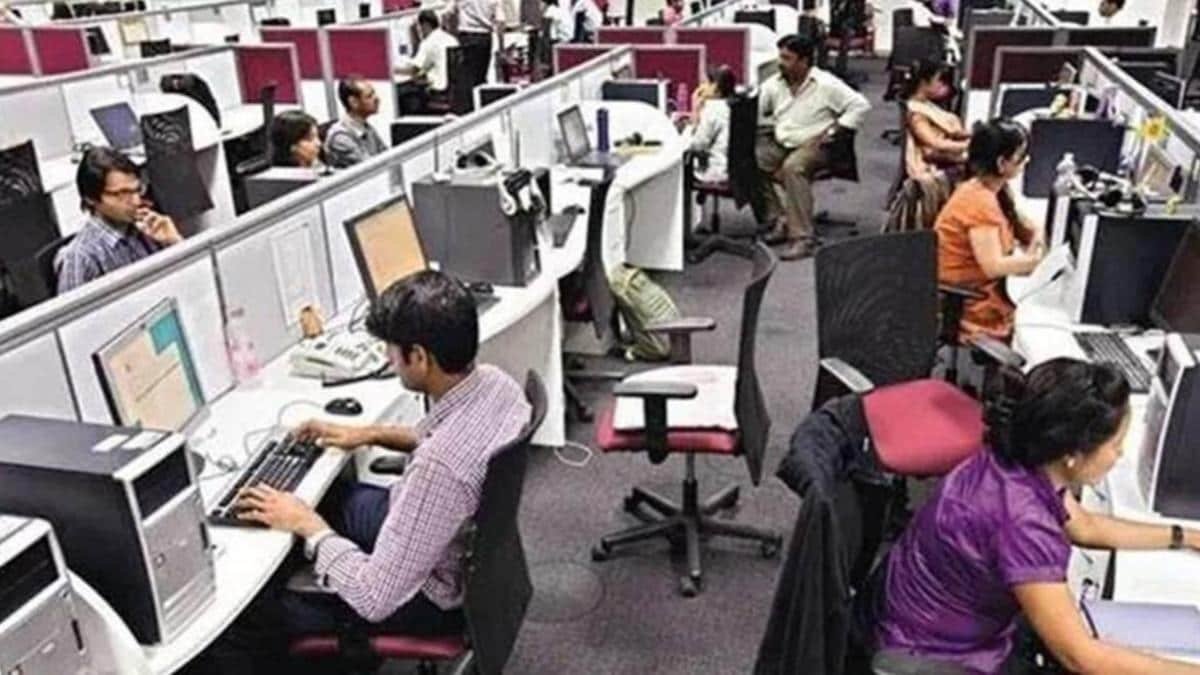
Information Technology (IT) and IT-Enabled Services (ITeS) have become an inherent part of everyday life — in communication, access to information, entertainment, banking, online shopping, home automation, online education, customer support, remote services, digital content creation, facial and biometric recognition, spyware, policing, infiltration, military warfare – the list is endless. India’s IT and ITeS sector provides employment to more than 5 million people.
Recent reports of large-scale retrenchment of workers by some of the top IT companies – TCS, Infosys, WIPRO — as well as demands by leading capitalists in the IT sector for workers to work up to 72 hours per week, etc. have raised concerns about the working conditions of IT workers. IT workers are forming their own unions to fight for their rights.
Mazdoor Ekta Committee (MEC) organised a meeting on the issue of Right to Security of Livelihood in the IT Sector, on 21 September. Representatives of several unions of IT employees addressed the meeting, which saw an enthusiastic participation of large numbers of youth, women and workers from many different sectors.
Among those who addressed the meeting were Shri Girish, Joint Secretary, Kamgar Ekta Committee (KEC); Shri Pawanjit Mane, Forum for IT Employees (FITE); Shri Alagunambi Welkin, UNITE IT Employees Union; Shri Baskar, Workers Unity Movement and Shri Kasi Rajan, Voice of IT Professionals (VOIP).
Shri Girish congratulated the representatives of the IT unions, who are organising the workers to fight for their rights. He gave examples of the long working hours and increasing insecurity of jobs in the IT sector. Describing the campaign that KEC has been carrying out in defence of the rights of the IT workers, he pointed out that the capitalist owners of the major IT companies – Tata, Infosys, Wipro, etc. – have amassed enormous wealth and become global monopolies, while the IT workers are facing increasing insecurity of livelihood. He highlighted the struggles of workers in public sector industries and services such as the railways, electricity, banking, insurance, telecom, health, education, etc., against the privatisation program of the rulers, which is threatening their security of livelihood and at the same time, making these services increasingly out of reach of masses of working people.
The source of the increasing exploitation and worsening conditions of the IT workers, as of workers in other sectors, he pointed out, is the relentless greed of the capitalists for maximum profits. Our struggle is against the capitalist system and the state that defends it, he said. Our struggle is for an alternative system which works for the well-being of all the people, and for a state that will guarantee us our rights. In conclusion, he called upon IT workers to step up their struggle and to unite with workers in other sectors to take the struggle forward.
Shri Pawanjit Mane spoke of the work they have been doing to organise the IT workers into a union and to make them conscious of the need to fight for their rights. First, the government must recognise their rights as workers. Second, IT workers themselves need to be aware of their statutory rights and entitlements. Shri Mane described how, in the various court cases their union has taken up in defence of workers in TCS, WIPRO, etc., they have had to establish their status as workers. He narrated the intimidating tactics used by the management to force workers to resign. The recent announcement of increased working hours in workplaces by the Maharashtra Government could mean that IT workers will now be forced to work for even longer hours.
Shri Mane thanked MEC for providing a platform to discuss their problems with workers of other sectors and to combat the prevailing notion that IT workers are ‘privileged’. Through their struggles in Maharashtra, IT workers have now forced the state assembly to discuss their plight and consider their demands. He called for keeping alive their unity and fighting spirit.
Shri Welkin exposed the real reason for the large-scale retrenchments in the IT sector. The capitalists want to get rid of the more experienced workers, who have given the best years of their lives for the growth of the company, and hire new workers who can be coerced to work for much lower salaries. He highlighted their demands for a 6-hour working day, menstrual leave for women, security of jobs and equal pay for equal work. The challenge before us, he pointed out, is to make IT workers conscious that they are part of the working class and that our struggle is against the capitalist class. He stressed the importance of building the workers’ organisation and increasing its membership as well as of united action among different IT workers’ unions.
Shri Baskar described how the IT companies hire youth through a rigorous selection process, make them go through training and assign them projects, which require them to work for 10-15 hours a day. Stress levels and suicide rates are very high among IT workers. After some years, when these workers have been exploited to the bone and the company has made huge profits, they are forced to resign. The retrenchment is justified in the name of being ‘future ready’. He questioned why the skills of the existing workers cannot be upgraded, when the IT companies boast of crores of funds spent on CSR projects. Experienced workers are thrown out and new workers are hired at lower salaries to maximise the capitalists’ profits, he said, exposing how the new labour codes will make it easier for the IT companies to hire and fire workers as they wish.
Shri Baskar concluded by giving a call to IT workers and workers of all sectors to unite, cutting across party affiliation, in a common struggle to put an end to capitalist exploitation.
Shri Kasi Rajan highlighted the problems of layoffs, long working hours without overtime payment, delayed wages and denial of benefits such as Providend Fund, unequal wages for men and women workers, discrimination on the basis of language and gender, denial of maternity and childcare benefits and sexual harassment of women workers in the IT sector. The workload is so intolerable that many workers are driven to suicide. Kasi Rajan exposed the various tactics used by the companies to give negative appraisals of workers, so that they are unable to get another job after they are thrown out, adding to their insecurity. He called on trade unions and other workers organisations to take up the issue of rights of IT workers with the government. He also called upon workers of all sectors to come out in joint actions in defence of their rights.
Following the presentations of these speakers, several participants made important interventions.
Ms Sheena of Purogami Mahila Sangathan (PMS) spoke of the discrimination faced by women workers in the IT sector. Women are the last to be hired and the first to be fired, they are denied wages equal to their male counterparts, they are denied maternity leave and childcare benefits, and they face sexual harassment at the workplace.
Shri Pramod Javalkote raised the problems of IT workers being placed ‘on the bench’ and compelled to find their own projects or face termination. Shri Manohar Manav highlighted the problems of caste, religious and gender discrimination, as a tool to intensify the exploitation of workers. Ms Avantika spoke of long working hours and job insecurity, lack of leave and other benefits, while Ms Asmita advocated that work-from-home option should be provided for women workers who have to shoulder childcare and household responsibilities. Ms Riya pointed out that the capitalists are only concerned about increasing their profits and not the well-being of the workers.
Shri KK Singh of Lok Paksh reminded the participants that with the building of socialism in the Soviet Union, the problem of unemployment was completely eliminated, demonstrating to the workers of the world the superiority of the socialist system over the capitalist system. He called for an irreconcilable struggle by the working class to end capitalist exploitation and establish its own rule. Shri Hanuman Prasad Sharma, Vice President of Lok Raj Sangathan, emphasised the need for political power in the hands of the working class and peasantry, in order to build a society that can guarantee well-being and security for all the people. Others stressed the need to defeat the attempts of the rulers to divide workers on caste and religious lines.
Through this meeting MEC issued a call to workers in the IT sector as well as other sectors, to unite in struggle to put an end to our exploitation by the capitalist class. We workers, in alliance with the peasantry and all other oppressed, must become the ruling class, and build a new society in which the right to security of livelihood, the right to a life of dignity and well-being will be guaranteed for all, the meeting concluded.