
Letter by Shri E A S Sarma, Former Secretary to the Government of India to the Prime Minister of the Government of India
13/12/2025
To
Shri Narendra D Modi
Prime Minister
Dear Shri Modiji,
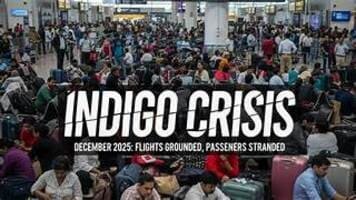
Thousands of Indigo flight disruptions during the last few days and the attempts made by smaller airlines to exploit the stranded passengers by offering seats at unconscionably high fares has caused intense trauma to passengers across the country and tarnished India’s image globally.
The Civil Aviation Minister had tried to wash his hands off the mess by placing the blame squarely on the managers of Indigo, as if his Ministry had nothing to do with it. The government, as usual, has adopted a defensive posture, extending routine support to the Ministry, ignoring the fact that all those affected by the crisis feel helpless in expressing their anger at the overall failure of your government in terms of governance in the aviation sector,
In this connection, I wrote a letter on December 8, 2025 to the Cabinet Secretary (https://countercurrents.org/2025/12/civil-aviation-ministry-ignored-warnings-on-indigo/) pointing out the larger issues that were at the root of the Indigo crisis, which I hoped the Cabinet Secretary would place before you but evidently, there has been no meaningful response to what I have said.
Had the Civil Aviation Ministry and the Ministry of Corporate Affairs, as well as the regulators like SEBI and the Competition Commission woken up in time to the fact that Indigo had started becoming a near monopoly several years ago and had they acted firmly and in time, the present crisis would not have taken place. It is unfortunate that Indigo should start dictating terms to the Civil aviation Ministry, as any unregulated private monopoly would do. On July 8, 2019 (more than 6 years ago), Shri Rakesh Gangwal, an aviation expert in his own right and a co-promoter of Indigo, addressed the SEBI pointing out numerous corporate governance failures on the part of Indigo’s management. Indigo forwarded that letter the next day to the SEBI and the national stock exchanges, by way of a statutory disclosure pursuant to sub-regulation (1) of Regulation 30 of the SEBI (Listing Obligations and Disclosure Requirements) Regulations, 2015. Failing to get any respite from the regulators, Shri Gangwal quit Indigo’s Board in February, 2022 (three years ago)
Shri Gangwal’s letter highlighted numerous corporate governance failures on the part of Indigo’s senior management, including brazen violations of SEBI’s regulations, related-party transactions, Indigo management’s decisions that made a mockery of the role of the “independent directors” and so on. I am sure that both the Ministry of Corporate Affairs and the Civil Aviation Ministry were well aware of this but chose not to act.
On Indigo appropriating an increasing market domination, both the UPA-2 and NDA became mute spectators, displaying no will or inclination to understand the potential dangers involved on account of emergence of monopolies. Both Niti Ayog and the NDA government unwittingly encouraged wholesale privatisation of CPSEs like Air India and consciously nurtured private “global champions”, which really meant choking competition altogether. One Niti Ayog proponent of that idea is now occupying the cosy position of a Director on the Board of Indigo!
DGCA had expressed reservations as early as in December, 2011 on the rapid rate at which Indigo was expanding and its likely adverse impact on passenger safety. The then UPA government ignored that warning, as the philosophy unleashed on the nation since 1991 has been that private companies do no wrong.
Indigo grew far more rapidly since 2014, evidently with NDA’s blessings.
For example, Indigo which, in 2016, had 107 aircraft, serving 33.1 million passengers, earning profits (after tax) of Rs 1,986 crores, increased its fleet size to 434 by 2025, serving 118 million passengers and earning profits of Rs 7,258 Crores. Today, it dominates the aviation sector with a mind boggling share of 64%!
Meanwhile, the successive Civil aviation Ministers, assuming that their success lies in expanding the number of airports, continued to announce new airports indiscriminately in different parts of the country, giving them an opportunity to impress their constituencies with flashy ribbon-cutting inaugurations, not making sure that such a rapid expansion should be matched by the number of aircraft available and the number of pilots to navigate the aircraft. This further fuelled the senseless boom in the aviation sector.
Indigo faced shortage of aircraft but, reluctant to forego the profits, started juggling the limited number of aircraft, often delaying flights that caused untold misery to passengers. Likewise, the airlines ignored established norms of working hours for pilots, deliberately violated the norms stipulated by DGCA, compromising passenger safety (https://economictimes.indiatimes.com/industry/transportation/airlines-/-aviation/indigo-crisis-global-pilots-warn-indias-rest-rule-exemption-for-indigo-raises-safety-concerns/articleshow/125862654.cms?from=mdr)
Indigo also faced staff shortage, a fact that inspired the irrepressible humourist, Jaspal Bhatti to produce a hilarious video documentary (https://twitter.com/i/status/1997355483502686530)
Incidentally, Indigo being a donor of election funds to the ruling political party, perhaps felt a sense of entitlement to defy the regulator.
Had those in power turned their attention to lesser mortals who travel by bus or train, they would have invested the nation’s scarce resources in creating more bus terminals and passenger train facilities that an ordinary Indian could afford. Perhaps, in the perception of our leaders, India can shine only if its affluent sections feel happy. Ordinary people are there only for casting votes.
Conscious nurturing of monopolies results in those monopolies calling the shots, not the concerned regulators. Monopolies are known to dominate the market, manipulate it to suit their interests, manipulate and dictate the prices and capture regulators so as to have the freedom to do what they like.
That is what has happened to the aviation sector.
While it is necessary for the NDA government to cut the size of Indigo immediately and promote genuine competition in the aviation market, so as to maximise passenger well-being and safety, it should also take note of the fact that its own policies have paved the way for the growth of monopolies in several sectors, including telecom, airports, ports, minerals, energy and so on.
In the telecom sector, with a complete sway over satellite spectrum, Elon Musk’s Starlink, which operates closely with the US defence forces, will soon exercise close surveillance over India, as a result of the slew of concessions showered on that company by your colleague in the Telecom Ministry. The two domestic telecom operators may have to condescend and become mere partners with Starlink, eliminating whatever little competition that was there.
Similarly, there are oligarchs waiting to control solar energy generation and electricity distribution, who will soon dominate the energy sector. It is millions of helpless electricity consumers who will have to pay the price for such regressive monopolistic forces unleashed on them.
I need not point out how seaports and airports are slowly slipping away into the hands of waiting oligarchs, who in turn would impose the cost of their domination on the economy and the public.
With the amendments proposed by your government to the Atomic Energy Act and the Civil Liability for Nuclear Damage Act to open the doors for foreign players to dominate nuclear energy and minimise their liability for accidents some of which may be attributable to their lapses, the Nehru-Bhabha vision of India’s strategic self-reliance in the field of nuclear facilities will get severely get compromised and, as a result of Western nuclear oligarchs gaining ground in India, the cost burden of their domination passed on to millions of electricity consumers in India.
In the past, the CPSEs would have at least offered some semblance of competition to private players but your government has embarked on a wholesale decimation of the public sector, clearing the deck for big businesses to appropriate the nation’s scarce resources to profiteer at the cost of the people.
Mr Prime Minister, kindly take note of the fact that Indigo represents only the tip of the monopoly monster and, unless your government wakes up now and reviews its policies on privatisation of CPSEs, promotion of large unregulated private companies, policies to bend labour laws, environmental legislation, mineral regulations, and so on, in the guise of promoting “ease of doing business”, to enable oligarchs to flourish, I have no doubt that the nation will soon be confronted with Indigo-like ugly situations in several other sectors.
I hope your government draws lessons from the ongoing Indigo imbroglio and, in consultation with all political parties, the States and the public at large, adopts policies that promote the well-being of the people, not the profits of a few oligarchs. I earnestly hope that these larger issues come up for discussion in the Parliament.
Regards,
Yours sincerely,
E A S Sarma
Former Secretary to the Government of India
Visakhapatnam