
By Shri Ashok Kumar, Joint secretary, Kamgar Ekta Committee (KEC)
The privatisation of power sector is at present being pursued on multiple fronts. The Electricity (Amendment) Bill 2025 is under finalisation and could be put up in Lok Sabha anytime for its approval. A new draft of the National Electricity Policy 2026 has been released. Both the above are meant to privatise power distribution sector and abolish supply of subsidised power to farmers and poor people. The enactment of the SHANTI Act has opened up the nuclear power generation to private sector. The UP government is pursuing the privatisation of the two of its largest distribution companies. It also wants to privatise its small hydro-power generation plants. Similar attempts are on in other states, too.
Installation of smart meters all over the country has already been going on for the last few years with a view to make power supply a pre-paid service. This, too, has been taken up to prepare the grounds for large scale privatisation of around 60 state government owned distribution companies and state power departments.
On 23 February 2026, the central government opened up another front when it announced the National Monetisation Pipeline (NMP) 2.0 which aims to monetise various power sector assets worth Rs. 2.76 lakh crore over five years, starting from 2025-26 to 2029-30. How aggressively the privatisation of power sector is being pursued becomes evident from the fact that the target of the NMP 2.0 for the power sector is three times more than what was planned under the NMP 1.0.
Monetisation is yet another form of privatisation. Due to the widespread opposition to privatisation, different nomenclatures are used by the government to hide the real intent from people.
The new area of privatisation under the NMP 2.0 is the monetisation of major hydropower plants of the country. It is planned to monetise nearly 5000 MW of hydropower capacity of NHPC Ltd. (formerly National Hydro-Power Corporation) and SJVN Ltd (formerly Satluj Jal Vidyut Nigam). This will amount to privatisation of more than one-fifth of the major hydropower capacity of the country.
Hydropower is one of the cheapest renewable sources of power generation. Once the capital has been spent to set it up, the cost of generation is very little. The use of hydropower helps to reduce the overall tariff of power supplied to consumers. Once the hydropower is privatised, it is bound to lead to increase in power rates.
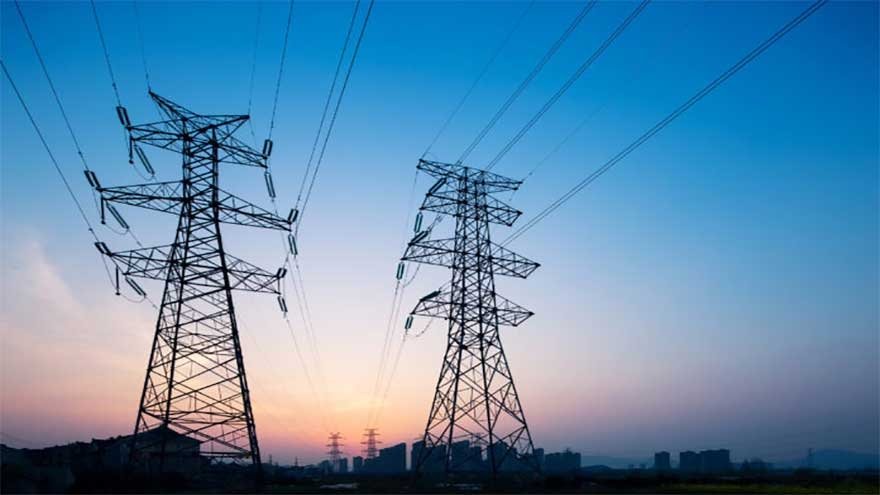
The biggest area of monetisation is going to be the transmission of power. Due to the rapid increase of solar power generation capacity, there is urgent need to enhance the inter-state transmission capacity so that power could be taken from the generating states to consuming states. Large solar power generating capacity has been set up in Gujarat and Rajasthan which needs to be transmitted. Nearly 22,000 ckm (circuit kilo meter) of inter-state transmission lines are planned. It is proposed set them up using Build-Own-Operate-Transfer (BOOT) model.
It is planned to also monetise nearly 15,000 ckm of the existing transmission lines of the Power Grid Corporation.
The privatisation of public sector power companies by selling their shares will be further pushed under the NMP 2.0
Power sectors workers along with consumers have been staunchly opposing every move to privatise power sector. Their struggles have succeeded in temporarily halting it in a few cases. However, the government is relentlessly pushing power sector privatisation.
The biggest capitalist groups of the country like Tata, Adani, Jindal, Goenka, Torrent, etc. see huge opportunity of profit in power distribution sector once the so-called power sector reforms are completed. They have over the years already acquired a dominant share in power generation. Now they wish to control both transmission and distribution segments of the power sector. It is their agenda which is being implemented by both the central government and state governments. Every political party which is in in command of the government, whether in Centre or in States, has been pushing the privatisation agenda. It is the agenda of the ruling class of the country, a few hundred biggest capitalist monopoly houses, which is implemented. The fight against privatisation has to be waged keeping the above in mind.