
Report by Kamgar Ekta Committee correspondent
People of Leh and Kargil believe that the proposal to corporatise and privatise the Power Development Department of Ladakh will lead to an increase in power tariff, will worsen the unemployment problem and compromise national and strategic security interests. The proposal follows from the decision of the Union Government to privatise power in all the union territories.
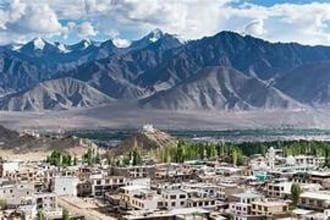
The Apex Body Leh (LAB) and the Kargil Democratic Alliance (KDA) have opposed to the Ladakh administration’s proposal to privatise the power sector in the region. The LAB and KDA said that the proposal will lead to an increase in power tariff, will worsen the unemployment problem and compromise national and strategic security interests.
The joint letter written by them to Lt Governor said, “(We) express our strong objection and grave concern regarding the proposed formation of a Joint Venture between the Ladakh Power Development Department (LPDD) (49%) and the Rural Electrification Corporation (REC) (51%) for the power sector in Ladakh.” “Any such move, particularly in a sector as critical and sensitive as power, cannot and must not be undertaken without comprehensive public consultation and explicit safeguards for the people of Ladakh.”
The letter stressed, “Electricity in Ladakh is not merely a utility – it is a necessity for survival, particularly during harsh winters when reliable heating and energy supply are critical. Any shift toward a profit-driven or commercially oriented model raises serious concerns about tariff escalation. Increased electricity costs would directly burden households, the tourism industry, and small businesses, all of which are already operating under challenging geographical and economic conditions.”
The letter pointed out that that the “corporatisation” of the power sector would impact employment in the Ladakh region. “Ladakh is already facing rising unemployment among its youth since becoming a Union Territory, largely due to limited recruitment opportunities. The proposed model is likely to worsen this situation. Recruitment in entities like the Rural Electrification Corporation is conducted at the national level, often through the Graduate Aptitude Test in Engineering (GATE), without any preference for local candidates. As a result, Ladakhi youth are effectively excluded from technical and permanent roles.”
The letter further stated, “Ladakh is a strategically vital border region with immense national security significance. Power infrastructure here is not just an economic asset but a critical component of defence preparedness and civilian stability. Excessive reliance on profit-oriented or external entities in such a sensitive sector could compromise long-term strategic priorities. Retaining strong public control and oversight over power infrastructure is essential to safeguard national interests and ensure uninterrupted service in critical situations.”
The letter demanded that any structural transformation in a strategically sensitive border region with unique geographical, climatic, and socio-economic realities must be undertaken with extreme caution, transparency, and full participation of the people.