
By Dr. S. Das, Joint Secretary, Kamgar Ekta Committee
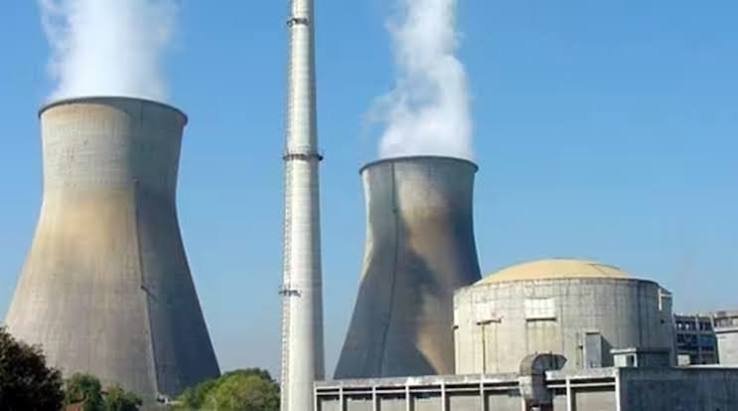
The release of the draft rules for SHANTI (Sustainable Harnessing and Advancement of Nuclear Energy for Transforming India) Act, on 14 Aug by the central government has once again drawn attention to the anti-people, pro-capitalist nature of this Act. The Act covers all aspects related to generation of nuclear energy and was passed by the parliament in December 2025. The Act repealed the Atomic Energy Act, 1962, and the Civil Liability for Nuclear Damage (CLND) Act, 2010, and replaced them with a single law.
With the passing of the Act, the nuclear power sector has been opened to the private sector. When the generation of electricity by other means was thrown open to private companies in the 1990s, nuclear power generation was retained as a state monopoly because of its strategic importance, given its close connection to the production of nuclear bombs.
While introducing the SHANTI Bill, the government announced that the aim of the Bill is to facilitate growth in nuclear power production in the country from less than 9000 megawatts at present to 100,000 megawatts by 2047. The government justified the privatisation by claiming that private sector participation is essential to achieve this target. The monopoly groups like Tata and Adani have already declared their interest in entering nuclear power generation.
According to the Atomic Energy Act of 1962, it was the duty of the central government to strictly control nuclear energy as it required enormous expertise and care so that accidents did not occur.
An accident in a nuclear power plant is unlike all other industrial accidents. It necessitates the evacuation of everyone, including animals within 30 to 100 km, bringing a halt to all activities in the area. It can create radioactive fallout after the accident, rendering agriculture, annual husbandry and fisheries impossible for years within the affected area. It causes grave harm to people’s health for many decades.
The impact of the accident at Russia’s Chernobyl plant in 1986 and Japan’s Fukushima plant in 2011 was enormous. In most countries of the world including the USA, people are opposed to the setting up of nuclear plants.
In India, too people have been opposing whenever a proposed site for setting up a nuclear power plant is announced. Due to the opposition of people, the government was forced to abandon the nuclear power project site like Jaitapur in Maharashtra.
Due to the opposition in their home countries, nuclear plant equipment manufacturers like Westinghouse and General Electric of USA, EDF of France, Mitsubishi of Japan and others have been looking for new markets and they see a big potential in India. After the relaxations provided by the SHANTI Act, there is grave danger of India being turned into a testing ground for unproven technologies and equipment.
Foreign nuclear plant suppliers have been vehemently opposed to the Civil Liability for Nuclear Damage, (CLND) Act as it held the suppliers of nuclear power equipment liable in case of any accident and demanded the repeal of the CLND Act, which the SHANTI Act has done.
Anti-people pro-capitalist features of the SHANTI Act
- The SHANTI Act permits private and foreign companies to be in charge of nearly all the activities related with nuclear power generation – uranium mining, fuel fabrication, reactor operation, and reprocessing of used fuel. Each of these activities carry risks from radioactive leaks, long‑lived radioactive waste, and catastrophic accidents.
- The Civil Liability for Nuclear Damage Act of 2010 established strict operator liability under the “polluter pays” principle and allowed plant operators to hold equipment suppliers responsible in cases involving defective equipment or gross negligence. The SHANTI Act sharply limits the liability of nuclear plant operators and responsibility of plant suppliers. Compensation for nuclear accidents is no longer tied to the scale of damage suffered by victims. Instead, it is capped according to the installed capacity of nuclear plants. Even for the largest power plants, operator liability is capped at 3,000 crore rupees (approximately $319 million). Smaller plants carry proportionately lower liability limits. If the liability exceeds the cap, the government will step in and pay the compensation from public funds.
- The liability caps are far short of the cost of historical nuclear disasters. Cleanup costs of the Fukushima nuclear disaster in Japan have exceeded $180 billion, while the long-term economic consequences of the Chernobyl disaster in Ukraine continue to run into hundreds of billions of dollars.
- Penalties for regulatory violations are also small, with maximum fines of one crore rupees (roughly $106,000)—even in cases involving serious breaches.
- No claim can be filed in any court by the affected people. The Act also imposes a threeyear period for filing compensation applications, with extinction of the right to claim set at 10 years for property damage and 20 years for personal injury.
- The Act is largely silent on criminal liability in the event of nuclear accidents. It does not clearly address negligence, falsification of safety data, suppression of incident reports, or sabotage. By failing to define criminal accountability, the Act insulates private corporates from legal action.
- The Act is largely silent on long-term nuclear waste management and on-site waste disposal. Without clear plans for storage, disposal, and decommissioning funding, privately operated nuclear plants could leave future generations with unresolved radioactive legacies.
- Privatization also has serious safety implications for workers of the nuclear sector. Construction, maintenance, and waste handling in large infrastructure projects frequently rely on informal contract labour. Without strong regulatory oversight, these workers may face higher radiation risks and weaker protections. The SHANTI Act does not have adequate provisions about occupational safety standards, long-term health monitoring, or compensation for radiation exposure.
- While the Act grants statutory status to the Atomic Energy Regulatory Board, appointments remain controlled by the Department of Atomic Energy, with no independent selection process. The regulatory board’s mandate remains limited primarily to technical safety questions.
- The Act leaves unresolved questions about nuclear disaster response in India’s federal structure. It does not clearly define the roles of central, state, and local governments during nuclear emergencies or outline the mechanisms needed to coordinate response and recovery.
People of the country still remember the Bhopal Gas tragedy and what happened to those responsible for it and to those who suffered from it. The failure to hold Union Carbide and its successors fully accountable for one of the world’s worst industrial disasters is still remembered by us. People’s fears of regulatory failure, corporate impunity, and delayed justice in the cases of potential disasters in privately operated nuclear facilities are justified.
With drafting of the rules, the SHANTI Act is being brought into force despite the opposition of power sector employees, central trade unions, farmers and people of the country.
In short, the SHANTI Act enables Indian and foreign capitalists to profit from nuclear power generation, while the risks and consequences of potential nuclear accidents will be borne by us, the Indian people.