
Press Note of All India Power Engineers Federation (AIPEF)
AIPEF believes that the proposed joint venture prioritizes commercial interests over public welfare, national security, and long-term sustainability of the power sector in Ladakh.
ALL INDIA POWER ENGINEERS FEDERATION (AIPEF)
Press Note
29 April, 2026
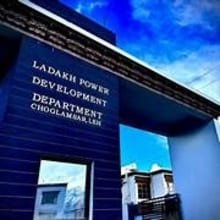
The All India Power Engineers Federation (AIPEF), under the leadership of its Chairman Shri Shailendra Dubey, strongly opposes the proposed Joint Venture (JV) arrangement for the Ladakh Power Development Department (LPDD), which is effectively a step towards privatization of a strategically critical public utility.
AIPEF expresses serious concern that the proposed model prioritizes commercial interests over public welfare, national security, and long-term sustainability of the power sector in Ladakh.
Impact on Poor & Domestic Consumers
The proposed JV model will inevitably lead to an increase in electricity tariffs due to provisions like Return on Equity (RoE) and commercialization of operations. This will disproportionately affect poor and low-income households in Ladakh, where affordability is already a major concern.
The current welfare-oriented functioning of LPDD will be replaced by a profit-driven model, undermining the principle of universal and equitable access to electricity. Though subsidy continuation is mentioned, it remains uncertain and dependent on future budgetary support, exposing consumers to policy risks.
Further, mechanisms such as incentives for arrear recovery may lead to aggressive disconnections, adversely impacting economically weaker sections. The long-term license period of 25 years locks consumers into a system with limited safeguards against tariff shocks.
Strategic & National Security Concerns
Ladakh’s geographical position as a sensitive border region adjoining China and Pakistan makes its power infrastructure a matter of national security.
Handing over control of critical electricity infrastructure to a JV entity, with provisions for third-party engagement, poses serious risks. It may dilute direct government control and open avenues for security vulnerabilities, including cyber threats.
In times of conflict or national emergency, reliance on a commercial entity could compromise responsiveness and alignment with national priorities. Additionally, fragmentation of the command structure through separation of operational functions weakens coordinated decision-making in a strategically vital region.
Structural & Governance Issues
Despite being termed a Joint Venture, the proposed structure effectively transfers control to a corporate entity, amounting to privatization in disguise.
Public assets built through government investment are being transferred without adequate safeguards, while liabilities such as employee benefits remain with the government. This creates an inequitable arrangement where profits are privatized and risks are socialized.
The move will also reduce transparency and democratic accountability, as public grievances shift from a government department to a corporate framework.
Employee & Service Delivery Concerns
While existing employees may be temporarily protected, the future workforce will likely be recruited on contractual terms, weakening job security and institutional strength.
Over time, this may lead to erosion of technical expertise within the public sector. Private operators may also lack the local knowledge and sensitivity required to operate effectively in Ladakh’s unique and harsh conditions, potentially affecting service quality.
Financial & Policy Risks
The proposed model does not resolve financial challenges, as it still depends on government support in the form of revenue gap funding. Instead, it adds an additional burden of profit margins.
Tariff-linked incentives may encourage cost escalation rather than efficiency. The long-term contractual lock-in restricts future policy flexibility, even if the model proves unsuccessful.
Ignoring Viable Alternatives
AIPEF strongly believes that instead of privatization, the government should focus on strengthening the public utility model through capacity building, governance reforms, and enhanced central support.
Given Ladakh’s strategic importance and difficult terrain, the power sector must remain publicly controlled, subsidized, and aligned with national priorities rather than commercial interests.
Conclusion
Electricity in Ladakh is not merely an economic commodity—it is a social lifeline and a strategic necessity.
The proposed JV/privatization poses serious risks, including:
– Increased tariffs for poor consumers
– Loss of sovereign control over critical infrastructure
– Heightened national security vulnerabilities
AIPEF urges the Government to immediately reconsider the proposed move in the larger public interest and national security perspective, and to engage with stakeholders before taking any irreversible decision.
Shailendra Dubey
Chairman