
Report of Kamgar Ekta Committee (KEC) correspondent
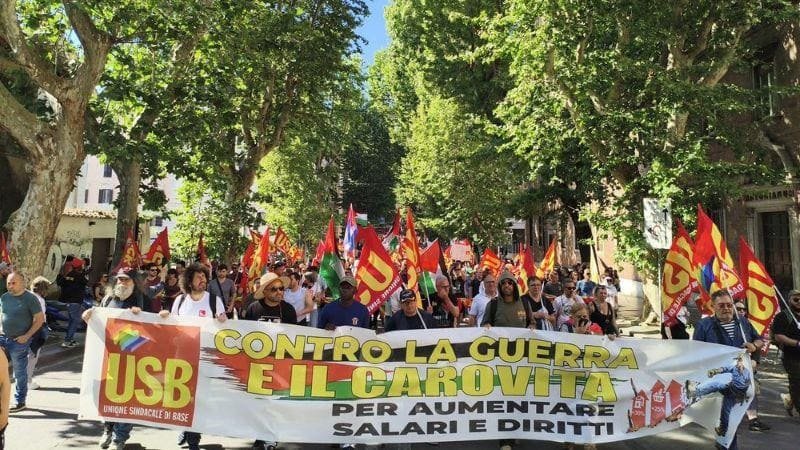
Nearly 15,000 people flooded the streets of Rome, Italy, on 23 May 2026 to protest against the rising prices, war and expenditure on purchase of arms.
Protesting workers were demanding increased wages for a dignified life. Recent national data reveal that 11 million people in Italy are at risk of poverty, while 5.7 million already live in absolute poverty. According to the report, almost half of the entire population was unable to save anything last year.
The Unione Sindacale di Base (USB), a major Italian trade union, stated, “The cost of living is rising, utility bills are going up, and essential goods are getting more expensive. Paychecks are staying the same while everything else is getting more expensive […] Wages and war are two sides of the same coin. The policies that fuel the arms race are the same ones that squeeze workers and reduce their incomes.”
Italian workers and citizens also organized a 24-hour general strike on 18 May, bringing transport, schools, and public services to a standstill. Among the main demands of the strike was a legally mandated minimum wage, and workers were also opposing spending cuts in the budget for public healthcare, pensions, education, and housing while billions were allocated to purchase arms.
In both actions, the working class of Italy strongly opposed the USA and Israel’s aggression against Iran and demanded the liberation of Palestine. It called upon the Italian government to cut ties with Israel and offer concrete support to Cuba.
Europe has seen an increasing number of large-scale protests and general strikes in recent times. These actions reveal the widespread anger among the working class. The working and toiling people do not want public money to be invested in rearmament and war. War helps only the big capitalists to increase their profit! Workers as well as students in Europe have been persistently coming out on the streets to demand an end to war and the accompanying austerity measures. They are opposing militarization and privatization and instead demanding public investment in healthcare, education, and other basic needs.
The USB noted that the demonstrations in Italy “brought together different disputes, regions, and sectors under a single demand: those who generate the country’s wealth must once again have a say.”