
Declaration of the National Convention of Workers and Farmers — July 29, 2026, New Delhi
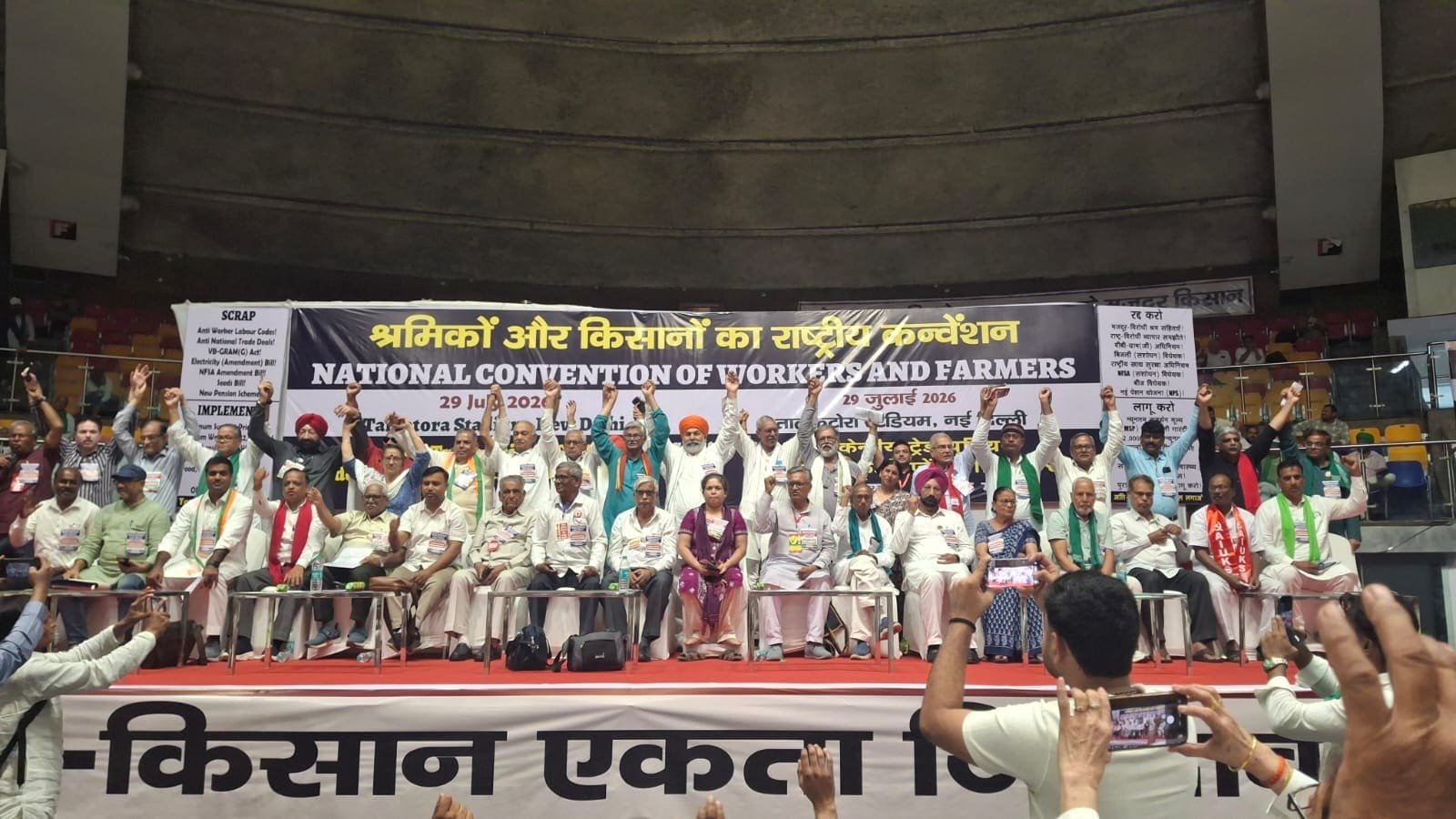
National Convention of Workers and Farmers — July 29, 2026, Talkatora Stadium, New Delhi
DECLARATION
Dear Friends,
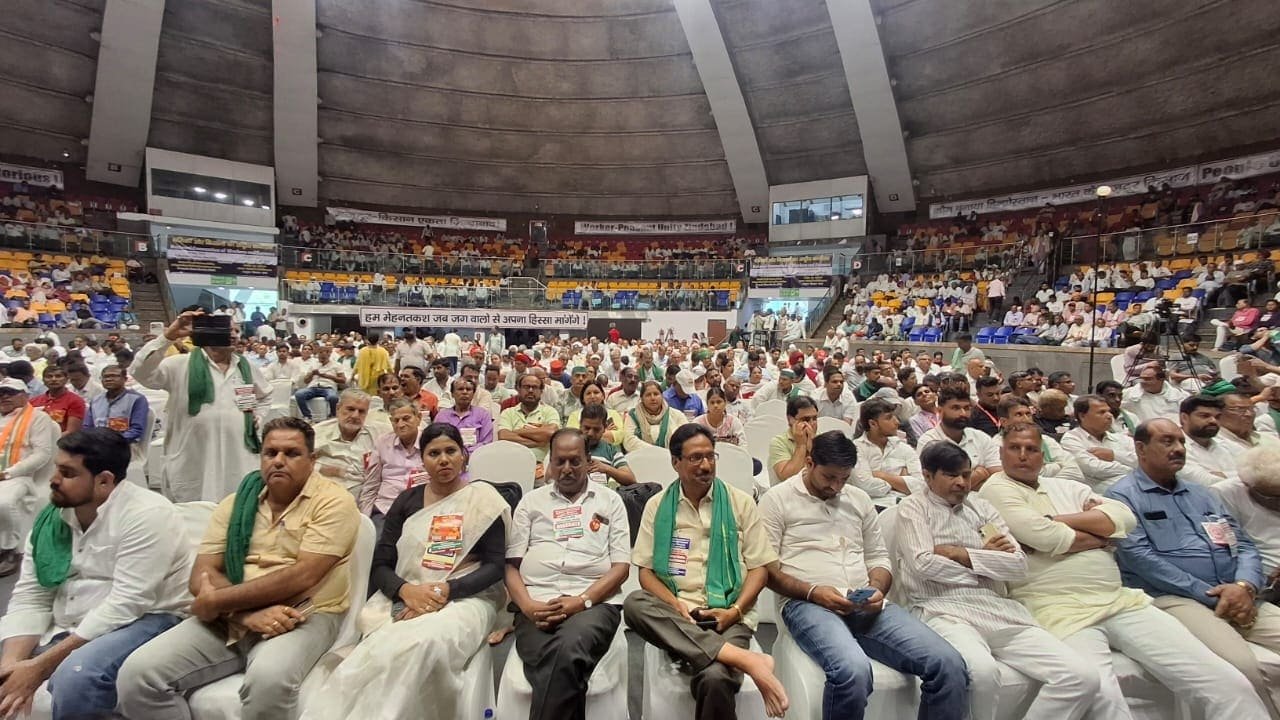
We, the Central Trade Unions and Regional Organizations, together with the Samyukta Kisan Morcha (SKM), are holding the second edition of the National Convention of Workers and Farmers today. The first convention was organized on August 24, 2023. Since then, we have been organizing coordinated and joint programs while extending solidarity to each other’s actions. The growing unity of these major productive forces of the nation is extremely crucial at a time when the country is facing deep economic, political, social, and cultural crises. The Central Government continues to adopt policies for the profit of large corporations—both national and foreign—while inequalities among the general public, especially the vulnerable and poor sections, have further widened.
Despite six national general/industrial strikes over the past six years and mass movements organized on numerous occasions by the platform of trade unions—sometimes jointly and sometimes in coordination with SKM—the government notified four harsh labor codes on November 21, 2025, and notified the rules on May 8 and 9, 2026. The objective behind this is to weaken and paralyze unions, making the registration and recognition of trade unions difficult while making the cancellation of registration and recognition easier, thereby legitimizing violations committed by employers.
According to the labor codes, unions and their leaders will be criminalized, while employers will be decriminalized. Workplace inspections have been effectively abolished under the guise of “facilitators,” relying instead on online inspection selection. The right to strike has been rendered practically impossible, increased working hours and fixed-term employment have been normalized, and the protection of the majority of workers under these codes has been thrown into jeopardy.
Due to the increase in thresholds under the Factories Act and Industrial Standing Orders, over 70% of factories and 90% of workers in the organized sector have been deprived of the protection of labor laws. All international labor standards, including collective bargaining and the tripartite system, are under threat. The Indian Labour Conference has not been convened since 2015. Existing social security acts have been subsumed into the Code on Social Security to weaken and eliminate these schemes, benefiting private sector insurance companies.
Migrant workers will suffer the most, as the sole act dedicated to their protection has been merged into the Code on Social Security and Welfare, omitting around 20 sections. The informalization of the formal economy is leading to a massive increase in the unorganized workforce, which now stands at nearly 90%. Social security for them is either nonexistent or negligible, depriving them of even a minimum basic standard of living. Several sector-specific laws providing social security benefits have been repealed, for instance, the act covering 7.5 million beedi workers. The list is endless.
On the other hand, following the historic and prolonged sit-in by farmers at the Delhi borders, in which more than 700 farmers lost their lives, the eleven promises made to farmers while repealing the three farm laws remain unfulfilled to date. Farmers are demanding a Minimum Support Price (MSP) calculated at C2+50%, protection of agriculture from corporate takeover, modernization of agriculture under producers’ cooperatives, comprehensive loan waivers, and the enforcement of the LARR Act 2013, among other demands. Ignoring the farmers’ demands, the Central Government has unabashedly chosen the path of altering market mechanisms and land relations through the active involvement of state governments to implement its anti-farmer policies from behind the scenes.
Now, the Central Government is moving toward trade agreements with the US, the European Union, and several other countries, which are detrimental to our agricultural sector as well as Micro, Small, and Medium Enterprises (MSMEs). This will undoubtedly pave the way for destruction for our nation’s farmers, small businesses, trade, and supply chains. Farmers’ rights over seeds and the scientific innovations carried out by our agricultural universities for indigenous agricultural development are being undermined and endangered.
The war situation in the Middle East and Europe is also a matter of concern, resulting in increased prices of fuel and fertilizers. Tariffs imposed by the US under the pretext of oil imports from Russia have already had an extremely adverse impact. We, as workers and farmers, are opposed to wars and stand in favor of world peace. Indian workers have suffered loss of life and property in these war zones of West Asia and in the Russia-Ukraine war in Europe.
The government continues its privatization/disinvestment and sale of Public Sector Undertakings (PSUs) and public services such as railways, ports and docks, coal and non-coal mines, oil, gas, steel, copper, defense, road transport, airports, banks, insurance, telecommunications, postal services, atomic energy, power generation and supply, while pushing National Monetization Pipeline 2.0. This poses a threat to our country’s self-reliant economy and serves the interests of corporates (especially a few select corporates favored by the ruling party) and international financial capital.
Workers and farmers are in a state of continuous movement, and we need to further strengthen these struggles in the national interest.
Over the past few months, the struggle of fixed-term and contract workers that began in Barauni and spread to Panipat, Manesar, Surat, Noida, Bhiwadi, Neemrana, Faridabad, Pithampur, and several other cities serves as a warning. Governments are ruthlessly using police force and making arrests against demonstrators fighting for wages, working hours, workplace safety, and trade union rights.
Agricultural labor unions and the rural working class are protesting against the abolition of the demand-based right to employment under MGNREGA and its replacement by the central-controlled scheme VB-GRAM-G. The demand for an employment guarantee scheme for the urban unemployed remains pending. The CTUs and SKM have extended their support to all programs conducted by agricultural labor unions and will continue to do so.
The New Education Policy has faced opposition from student and teacher organizations, as well as several groups of academics, who have organized numerous demonstrations against commercialization and communalization. Now, the corrupt examination system for admissions to various professional courses and recruitments has enraged the country’s students and youth. Nearly 152 question papers have leaked over the last ten years. Year after year, leaks in various examinations have left students, youth, and their parents equally distressed.
Unemployment is at an unprecedented level. Sanctioned posts in various government departments and public sector services are not being filled; instead, sanctioned posts remain vacant, as seen recently in the case of the railway notification. 26% of teaching posts in government universities and 28% of posts in government technical institutions are vacant. Approximately 5 million sanctioned posts remain pending across various government departments.
The youth are enraged by the humiliation imposed on them due to unemployment and dire conditions—a situation for which they are not responsible, but where the system is failing them. Over the past month, we witnessed their historic, continuous movement and mobilization in the hundreds of thousands on the streets of Delhi, drawing participants from every corner of India, which forced the Union Education Minister to resign. This mobilization of students and youth on the streets signals a pent-up anguish against an education and examination system that fosters life uncertainty. Repressive actions were taken to suppress the movement, including the reported use of pellet guns and lathi charges. The nation’s future is in crisis. Trade unions and farmers’ organizations have extended their support to the agitating students on their legitimate demands for reforms in the corrupt examination system and government accountability.
Budgets for social sectors—such as health, clean drinking water, affordable public transport, social security, housing, and minimum basic civic services—are practically declining. Due to an unprecedented rise in the prices of essential commodities, the life of the common citizen is in distress.
Democratic space is shrinking. New laws enacted by the Center, such as BNS, or public safety laws adopted in Maharashtra and West Bengal, violate fundamental rights enshrined in the Constitution of India. An agenda of intolerance, polarization, and hatred in the name of religion, caste, language, and culture is being pursued, endangering our country’s centuries-old composite culture. We, the workers and farmers, together with all other sections of society, remain committed to defending constitutional rights, maintaining a peaceful and harmonious life, and will continue to exercise our right to struggle and agitate to achieve our just demands. We will intensify our struggle for a change in the government’s anti-worker, anti-farmer, and anti-national policies to save the people and save the nation.
Reaffirming our understanding from the first National Convention held in 2023 and keeping in view the further deterioration of the situation during this period, we adopt this Declaration with the following minimum demands for upcoming agitation programs, to be carried out jointly and with solidarity and coordination whenever decided upon.
Our Demands:
- Repeal the Labor Codes and Rules; ensure union formation, registration, recognition, an 8-hour workday, workplace safety, social security, the right to strike, and the right to collective bargaining for all workers in the formal and informal economies, and abolish fixed-term employment.
- Ensure Minimum Support Price (MSP) at C2+50% for all crops with a guarantee of procurement.
- Withdraw the Electricity Amendment Bill 2025. Repeal the SHANTI Act and stop the privatization of electricity.
- Increase minimum wages to ₹42,000 for all workers, including scheme workers and daily wage earners, linked with Dearness Allowance (DA).
- Scrap the Gram Jan Kalyan Act and restore MGNREGA with 200 days of work and a daily wage of ₹700.
- Cancel surrender and subordinating trade agreements.
- Comprehensive loan waivers for farmers and poor people.
- Strictly enforce the Agricultural Resource Control Act.
- Modernize agriculture under producers’ cooperatives, as well as agro-based industries under Public Sector Undertakings (PSUs) and the cooperative sector.
- Halt privatization/disinvestment and sale of PSUs and public services; stop NMP 2.0, the looting of natural resources, outsourcing, and contract work.
- Restore OPS (Old Pension Scheme), increase EPS-95, and provide universal pension for all.
- Fill sanctioned vacant posts; create new posts, jobs, and livelihood opportunities.
- Provide social security to contractual, daily, domestic, vendor, contractor, and self-employed workers, including waste pickers. Remove any eligibility caps on social security schemes.
- Ensure decent work and ratify ILO Conventions 87, 98, 189, and 190, as well as the resolution recently concluded for gig and platform workers at the 114th Session of the International Labour Conference (ILC).
- Repeal the National Food Security Act (NFSA) Amendment Act, curb rising prices, and ensure a universal Public Distribution System (PDS).
- Increase the government budget for education from primary to higher education, curb corruption, and ensure accountability in paper leak cases involving NET and other such examinations.
- Recognize health as a right; expand coverage in ESIC and public health services; increase the government health budget from primary/local to district and city hospitals.
- Ensure government services for clean drinking water, sanitation, and shelter/housing.
- Withdraw harsh provisions under UAPA and BNS.
- Impose wealth tax and increase income tax on the super-rich.
Against the backdrop of this severe crisis, there is no path forward other than continuing the struggle unitedly and supporting democratic movements in the broader interest of the nation.
We resolve to intensify independent and joint struggles against the anti-people, anti-national, corporate-friendly government through coordinated and united action, mobilizing all sections of the public in these struggles.
In memory of the great Quit India Movement of 1942 against our country’s colonial rulers, we will organize decentralized protest demonstrations across India on August 10 at the district level and at Governors’ offices in state capitals. Various formats will include Rail Roko, Rasta Roko, lunchtime protests at workplaces, wearing demand badges, human chains, etc.
- Organize joint and coordinated meetings/conventions in states.
- Organize a multi-day decentralized Mahapadaav of workers and farmers in the near future.
- Continue extending solidarity support to the respective movements of both fronts.
- Prepare for multi-day nationwide agitations/direct action programs if our demands are not met.
- Maintain continuous progress toward fulfilling our demands and strengthening the struggle to achieve a society based on equality and justice for all.
Jointly Adopted By:
Central Trade Unions, Regional Organizations, and Samyukta Kisan Morcha