
By Shri E A S Sarma, Former Secretary to the Government of India
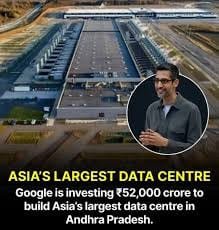
There is a mad rush across the world to set up mega AI/ data centres. Unfortunately, India has also joined the bandwagon.
According to some projections, the cumulative global capacity of data centres will reach 200 GW during the next ten years, of which 50% will come up in the USA, 30% in Asia-Pacific and the rest in other regions including India.
Data centres are known to be big guzzlers of water and electricity. 200 GW of data center capacity will annually consume 1,200 Twh of electricity and more than 1000 million cubic meters of water.
A data centre boom of that kind will call for trillions of dollars of investment. No one knows what kind of financial returns such investments are going to yield. One should not be surprised if this turns out to be yet another financial bubble about to burst.
Some data centre projects in the USA have met with stiff local resistance, as they create local water scarcity, thermal stress and pressure on electricity supplies. Therefore, IT companies like Google are shifting their projects to developing countries like India, where data protection laws are somewhat fragmented and crony capitalism is rampant.
Local political leaders in India are bending backwards to offer promoters of data centres unprecedented tax concessions, along with huge subsidies on land, water and electricity. It is ironic that the Union Finance Minister should also announce a “tax holiday” for “foreign data centres” till 2047, a decision that does not seem to have been taken on the basis of a careful evaluation of the social costs and social benefits from those data centres.
The subsidies and subventions given to data centres in India seem to add up to about half of the total investment on them, making a mockery of the very idea of a private promoter taking investment risks in return for profits. On the other hand, there is no guarantee that those data centres will offer any significant number of jobs at different levels to local youth, nor any facility to train them for those jobs.
To accommodate those data centers, the local governments in countries like India are forcibly displacing hundreds of small farmers from their lands, their primary source of livelihood. Many among those displaced belong to the most disadvantaged sections of the population. The so-called “compensation” offered to them is meagre, in no way related to the market value of their lands. Those lands were given to them by earlier governments decades ago to empower them by providing them a source of livelihood. All of a sudden, as a result of a data centre arriving on the scene, those unfortunate land assignees stand deprived of the only asset they have. Neither the promoters of the data centres who earn trillions of dollars of profits nor the political leaders of today who place private interests above the public interest, seem to understand the intense trauma suffered by those unfortunate land losers.
It is equally unfortunate that marginal farmers and unwary taxpayers should be forced to subsidise those IT companies which earn trillions of dollars of profits annually.
On the east coast of India, as of now, four 1-1.5 GW data centers are coming up in heavily populated, water-scarce areas, posing an imminent water crisis in those areas. In urban areas, they accentuate drinking water shortage. In rural areas, they consume water at the cost of agriculture.
The scramble for those data centers in countries like India is such that the State governments are turning a blind eye to the local environmental havoc they cause, bypassing the required prior statutory processes of evaluating their environmental implications and appraising their social costs.

In the case of one such data centre project in Visakhapatnam (see picture), the project managers are cutting down rich vegetation and starting construction activity on a lush green hill slope, blocking water inflows into a reservoir that provides drinking water to the city’s residents. Once the data centre’s activity starts, it is bound to pollute the reservoir downstream. On the other hand, that data centre will also consume enormous quantities of water at the cost of the local community. In the normal course, when such a project is to be taken up, the law requires prior public consultation. However, political leaders in the State have no time to comply with the law of the land, when it comes to rolling out the red carpet for companies like Google.
Some of those IT companies in the USA have recently signed contracts with the Pentagon, despite protests from their own employees. Outside the USA, it has raised concerns about data sovereignty, as USA’s CLOUD Act, 2018 and other data laws empower its law enforcement agencies to compel those IT companies to disclose data (emails, files, communications) stored on servers, regardless of whether they are located within or outside the USA. The government at the Centre in India is evidently unconcerned about the security risks involved.
It is high time that India wakes up to the harsh realities of AI/data centres, enact robust data sovereignty laws and regulations, discourage foreign promoters of data centres entering India and enhance indigenous capabilities in AI/data storage and processing. It is necessary to take decisions on data centre projects on the basis of a thorough evaluation of the social costs and social benefits.
Top of Form
Bottom of Form