
Resolution adopted by the Federal Executive Meeting of the All India Poer Engineers Federation (AIPEF) held at Bengaluru on 12 June 2026
AIPEF Federal Executive Meeting adopted eleven resolutions. As the resolutions deal with various attacks and attempts at privatization going on presently in the country and are of keen interest to power workers and consumers, we are reproducing the resolutions one by one.
We here below reproduce the third resolution.
(Please visit https://aifap.org.in/17805/ for full list of resolutions and the full text of the first resolution, “Against the any unilateral attempt of Tabling of the Electricity (Amendment) Bill, 2025 in the Monsoon Session of Parliament”. Please visit https://aifap.org.in/17819/ for second resolution “Against Grant of Parallel Distribution Licences to Tata Power in Karnataka and in Defence of Public Sector Electricity Distribution.”)
Resolution
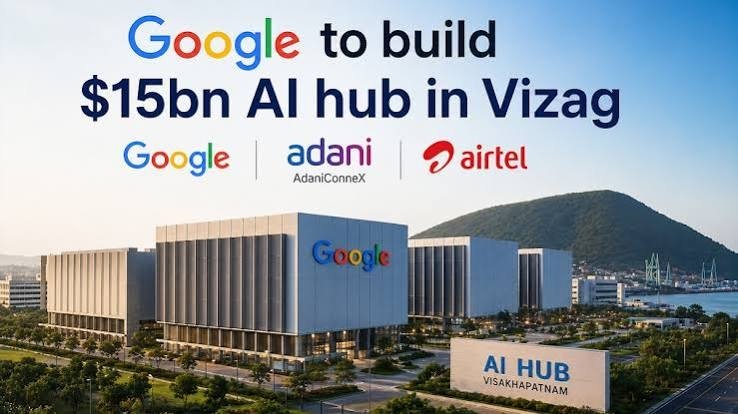
Against Grant of Distribution Licence to Google AI Data Centre in Andhra Pradesh and its Adverse Impact on The Public Power System
The All India Power Engineers Federation (AIPEF), representing power engineers across the country, expresses its deep concern and strong opposition to the decision of the Government of Andhra Pradesh to grant a separate distribution licence/status to the proposed Google Artificial Intelligence Data Centre at Visakhapatnam.
AIPEF views this decision as a serious departure from the basic principles governing India’s public electricity distribution system and a move that could create dangerous precedents affecting the financial viability of public sector DISCOMs, the cross-subsidy framework, consumer interests and future public investment in the power sector.
The proposed Google AI Data Centre is expected to have a connected load of approximately 1.15 to 1.30 GW. Such a load is equivalent to the instantaneous addition of a medium-sized city to the Andhra Pradesh power system.
A data centre of this magnitude would consume around 11.4 TWh of electricity annually and would require uninterrupted round-the-clock supply at a very high load factor. Unlike ordinary industrial consumers, AI data centres operate continuously throughout the year and create a persistent and non-flexible demand on the power system.
AIPEF notes with concern that while approvals for large-scale data centres have been granted on a fast track basis, no transparent public assessment has been made available regarding:
– Additional generation capacity required to serve this load.
– Additional transmission infrastructure needed.
– Additional distribution infrastructure investments.
– Impact on existing consumers.
– Impact on tariffs.
– Impact on grid stability.
– Environmental implications arising from additional thermal generation.
The people of Andhra Pradesh have a right to know the full implications of such a large commitment of public resources.
The establishment of the Google AI Data Centre is expected to require substantial strengthening of the state transmission and distribution network.
The existing 132 kV and 220 kV network in the Visakhapatnam–Steel Plant corridor is likely to require extensive augmentation. A dedicated 400 kV substation and associated transmission infrastructure may become necessary to serve the projected load.
AIPEF estimates that infrastructure strengthening by APTRANSCO alone may require investments in the range of ₹500–700 crore or even higher depending upon the final configuration of the network.
The Federation seeks clarity on the following issues:
– Who will bear the cost of transmission strengthening?
– Whether APTRANSCO and public utilities will finance these investments.
– Whether such investments will ultimately be recovered from ordinary consumers through higher tariffs.
– Whether public resources are being diverted to support a single corporate consumer.
Public infrastructure developed over decades through consumer contributions and taxpayer resources cannot be converted into a subsidy mechanism for private corporate entities.
The Andhra Pradesh power system has been developed primarily to serve domestic consumers, agriculture, small industries, public services and economic development.
If a substantial portion of available generation and transmission capacity is earmarked for a single AI data centre, existing consumers may face:
– Reduced system flexibility.
– Increased transmission congestion.
– Delays in network expansion for public needs.
– Increased tariff burden.
– Diversion of management and engineering resources.
AIPEF believes that the interests of existing consumers, especially domestic consumers, farmers and economically weaker sections, must take precedence over the commercial requirements of large multinational corporations.
The Andhra Pradesh grid already carries substantial industrial and port-related loads in the Visakhapatnam region.
The proposed data centre would impose a continuous demand exceeding one gigawatt, requiring:
– Dedicated transmission corridors.
– Reactive power compensation systems.
– Voltage stability measures.
– Advanced grid management systems.
AIPEF seeks clarification whether APTRANSCO will be required to install:
– Static Var Compensators (SVCs).
– STATCOM systems.
– Additional 400 kV transmission infrastructure.
– Special reliability arrangements.
The Federation further seeks disclosure of the estimated capital expenditure and implementation timelines.
AI data centres operate continuously and require reliable firm power.
Given the present generation mix in Andhra Pradesh, a substantial portion of this demand is likely to be met from coal-based generation sources, including thermal stations in the state and the regional grid.
This would:
– Increase coal consumption.
– Increase greenhouse gas emissions.
– Increase local air pollution.
– Raise the average grid emission factor.
Before granting special concessions, the Government must publicly disclose the environmental consequences of servicing such large AI loads.
One of the most serious consequences of granting a separate distribution licence is the erosion of the cross-subsidy mechanism that sustains the public electricity system.
Industrial and commercial consumers presently contribute significantly towards:
– Agricultural subsidies.
– Domestic consumer subsidies.
– Rural electrification.
– Social obligations of public utilities.
By granting a separate distribution licence and exempting the data centre from normal tariff structures, cross-subsidy surcharge and additional surcharge obligations, the state effectively allows a premium consumer to bypass its contribution to the public electricity system.
This directly weakens the financial foundation of public sector DISCOMs.
If such exemptions are allowed to proliferate, the burden of supporting public utilities will shift to ordinary consumers and state governments.
Legal and Regulatory Concerns
AIPEF questions the legal validity and regulatory rationale of granting distribution licence status to a single bulk consumer.
The Electricity Act, 2003 envisages electricity distribution as a public service responsibility undertaken within a regulated framework for serving consumers in a licensed area.
Granting distribution licence status to a single corporate entity:
– Violates the spirit of integrated public distribution.
– Creates regulatory asymmetry.
– Undermines public sector utilities.
– Sets a dangerous precedent for future demands from other large consumers.
Such a far-reaching policy decision cannot be implemented through isolated executive actions without comprehensive national debate and stakeholder consultation.
A Dangerous National Precedent
The Andhra Pradesh decision is not merely a state-specific issue.
If allowed to stand, similar demands can emerge from:
– Data centres.
– Industrial parks.
– Special Economic Zones.
– Technology parks.
– Corporate campuses.
– Large commercial developments.
This could gradually fragment the public distribution system and create exclusive private electricity enclaves across the country.
Such a development would fundamentally undermine the financial viability of public DISCOMs and weaken universal electricity access.
AIPEF Resolves That
1. The grant of a separate distribution licence/status to Google AI Data Centre is discriminatory and contrary to the principles of an integrated public electricity distribution system.
2. The decision threatens the financial viability of public sector DISCOMs by allowing a premium consumer to bypass the normal tariff and cross-subsidy framework.
3. Public investment in transmission and distribution infrastructure must not be used to subsidise private corporate operations.
4. The interests of existing consumers, particularly farmers, domestic consumers and weaker sections of society, must be fully protected.
5. Any additional infrastructure required for the data centre must be financed by the beneficiary entity and not transferred to ordinary consumers through higher tariffs.
6. The legal and regulatory basis for granting distribution licence status to a single bulk consumer must be subjected to independent scrutiny.
7. No policy decision with national implications should be implemented without consultation with state utilities, regulators, engineers’ organisations, employees’ federations and consumer representatives.
8. The Andhra Pradesh Government must publicly disclose the complete techno-economic study relating to the impact of the Google AI Data Centre on generation, transmission, distribution, tariffs, environment and consumer interests.
Therefore, AIPEF Demands
1. Immediate review and withdrawal of the special distribution licence/status granted to Google AI Data Centre or any similar private entity.
2. No grant of parallel, deemed or exclusive distribution licences that undermine the viability of state-owned DISCOMs.
3. Protection and preservation of the cross-subsidy framework.
4. Full public disclosure of all studies relating to power demand, infrastructure requirements, environmental impact and public investment associated with the project.
5. Assurance that no burden arising from infrastructure augmentation for the data centre will be passed on to existing consumers.
6. Strengthening of public sector DISCOMs through investment, modernization and operational reforms rather than facilitating corporate bypass arrangements.
7. A national policy discussion involving all stakeholders before permitting any model that allows large consumers to exit the public distribution framework.
8. A categorical declaration by the Government of India and all State Governments that electricity distribution shall remain a public service dedicated to serving all sections of society and shall not be converted into a selective business opportunity for large corporate entities.
Conclusion
AIPEF reiterates that India’s electricity distribution system has been built through decades of public investment and the dedicated efforts of power engineers, employees and consumers. The grant of exclusive distribution privileges to large corporate entities such as the Google AI Data Centre may appear attractive from an investment perspective, but it carries profound long-term consequences for public utilities, consumers, tariff stability and the federal structure of the power sector.
AIPEF calls upon power engineers, employees, trade unions, consumer organisations and all stakeholders across the country to unite in defence of the public electricity distribution system and oppose all forms of backdoor privatization and regulatory arrangements that weaken public sector utilities.